


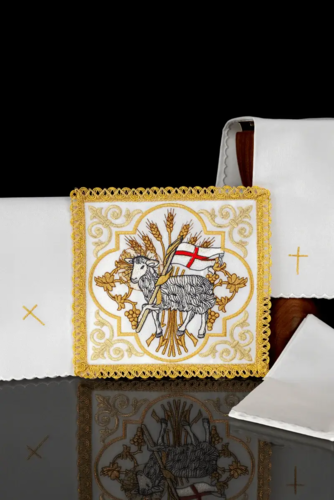
Easter, the cornerstone of Christian faith, is a season of profound spiritual significance, celebrating the resurrection of Jesus Christ. This joyous occasion is not only marked by solemn services and fervent prayers but also by the vibrant and symbolic artistry woven into liturgical textiles. Easter embroidery in chasubles, altar cloths, and vestments plays a crucial role in visually conveying the theological richness of this period. It transforms sacred garments and linens into canvases that tell the story of redemption, from the Paschal Lamb foreshadowing Christ’s sacrifice to the triumphant imagery of the Risen Savior.
The Lamb of God: A Symbol of Sacrifice and Salvation
One of the most enduring symbols of Easter embroidery is the Agnus Dei, the Lamb of God. This motif, deeply rooted in Old Testament prophecy and fulfilled in the New Testament, represents Christ’s ultimate sacrifice for the sins of humanity. In liturgical textiles, the lamb is often depicted with a banner, symbolizing victory, or carrying a cross, a direct reference to the Crucifixion. The use of white or gold thread for the lamb emphasizes purity, divinity, and the triumph over death. This symbol serves as a constant reminder during Easter services of the foundational event that makes resurrection possible – Christ’s willing sacrifice.
The Significance of the Paschal Lamb in Liturgical Art
The Paschal Lamb is more than just a decorative element; it is a theological statement. Early Christian art widely adopted this symbol, recognizing its potent connection to the Passover lamb that saved the Israelites from death. In the context of Easter, the lamb embroidered on a chasuble or stole visually connects the Eucharistic celebration with Christ’s sacrifice. It evokes the words of John the Baptist: “Behold, the Lamb of God who takes away the sin of the world!” This embroidery serves as a visual sermon, reinforcing the central message of Easter – redemption through sacrifice.
The Risen Christ: Victory and New Life
As Easter progresses, the focus shifts from sacrifice to resurrection and the promise of new life. Easter embroidery reflects this shift with imagery of the Risen Christ. This can manifest in various forms, from depictions of Christ breaking free from the tomb, often with angels in attendance, to abstract representations of light and glory. Gold and white threads become even more prominent, symbolizing the divine radiance of the resurrected Lord. Motifs like the empty tomb, ascending Christ, or the triumphant cross are powerful visual declarations of victory over sin and death.
Embroidering the Resurrection: Visualizing the Unseen
Depicting the resurrection is a challenge, as it is an event beyond human sight. Liturgical embroidery rises to this challenge by employing symbolic language and artistic conventions. An empty tomb, often shown with stone rolled away and grave clothes neatly folded, speaks volumes without literal representation. Christ ascending can be depicted as a radiant figure disappearing into heavenly light. The cross, often adorned with flowers or jewels, symbolizes not just suffering but also ultimate triumph and glory. These embroidered narratives allow the faithful to visualize the intangible mystery of the resurrection, enriching their spiritual experience during this pivotal liturgical season.
Symbolic Colors and Motifs in Easter Textiles
Beyond specific figures, the colors and other motifs used in Easter embroidery carry significant meaning. White and gold are paramount, signifying purity, joy, glory, and the divine presence. However, other colors can also be incorporated to reflect different aspects of the Easter season.
The Palette of Easter: White, Gold, and Beyond
White is the primary liturgical color for Easter, representing the resurrection, new life, purity, and light. Gold, often used in conjunction with white, signifies the divine glory and the triumph of Christ. The interplay of these colors in embroidery creates a visually stunning effect that elevates the sacred space. Sometimes, touches of green might be used, symbolizing the new life and renewal that Easter brings to nature and the spiritual life. Even symbolic representations of light, such as rays or starbursts, are common, all contributing to the festive and triumphant atmosphere.
Floral and Geometric Embellishments
Floral motifs are also popular during Easter, symbolizing new life, beauty, and fertility, mirroring the natural world’s awakening. Lilies, roses, and palm branches are frequently incorporated. Geometric patterns, such as intricate knotwork or stylized crosses, can add a sense of order, eternity, and divine structure. These elements, when artfully combined with figural imagery, create vestments and linens that are both theologically rich and aesthetically breathtaking, enhancing the solemnity and joy of Easter celebrations.
The Craftsmanship Behind Easter Embroidery
The creation of Easter liturgical textiles is a testament to skilled craftsmanship and deep devotion. Whether executed through intricate hand embroidery or advanced machine techniques, each stitch carries intention and reverence. The choice of fabrics, threads, and embellishments like pearls or semi-precious stones is carefully considered to create garments that are not only beautiful but also durable and appropriate for sacred use.
From Ancient Traditions to Modern Techniques
The art of liturgical embroidery has evolved over centuries, from early silk thread work to the sophisticated metallic threads and even digital embroidery techniques used today. Hand embroidery, with its unique texture and depth, continues to be highly valued for its artistry and the personal devotion it represents. However, modern technology allows for the creation of highly detailed and complex designs, making exquisite Easter vestments accessible to a wider range of churches. Regardless of the method, the underlying principle remains the same: to adorn the sacred with the utmost beauty and reverence, reflecting the glory of God.
Conclusion: Weaving the Easter Message
Easter embroidery in liturgical textiles is far more than mere decoration; it is a visual language that speaks volumes during the most important season of the Christian year. From the solemnity of the Agnus Dei, reminding us of Christ’s sacrifice, to the radiant depictions of the Risen Christ, proclaiming victory and new life, these embroidered works of art enrich the worship experience. They serve as a tangible connection to the mysteries of faith, inviting the faithful to contemplate the profound message of redemption and hope that Easter embodies. The skilled artistry woven into these sacred garments and linens ensures that the visual splendor of Easter complements its spiritual significance, creating an environment of awe, reverence, and profound joy.
https://chasubles.com/collections/easter
https://chasubles.com/