

The fashion industry has a waste problem. Between unsold inventory, physical sampling costs, and the carbon footprint of shipping prototypes across continents, getting a single garment from concept to consumer has historically been expensive — and messy. But something is shifting. A growing number of sustainable fashion brands are turning to digital tools, specifically high-quality apparel mockups, to rethink how they design, present, and sell clothing before a single stitch is made.
Why Physical Samples Are Becoming Obsolete
Traditional product development in fashion requires multiple rounds of physical sampling. Each sample costs money, time, and materials. For a small sustainable brand trying to minimize its footprint, ordering five rounds of cotton tees just to photograph them for a lookbook feels contradictory to the entire mission.
Digital mockups solve this beautifully. Brands can visualize colorways, graphics, and fits on photorealistic garment templates — without producing anything physical. The result? Fewer wasted samples, faster approval cycles, and a cleaner creative process that aligns with actual sustainability values.
How Real Brands Are Using Apparel Mockups in Practice
This isn’t theoretical. Forward-thinking brands across different market segments are already embedding mockups into their workflows:
- Patagonia-inspired indie labels use digital garment visuals to test graphic placement on hoodies and jackets before committing to a production run. Catching a design error digitally versus post-production saves both money and fabric.
- Print-on-demand sustainability startups rely entirely on Apparel mockup templates to populate their online stores. No warehouse, no overproduction — products only exist physically once a customer orders.
- Ethical basics brands present their seasonal capsule collections to wholesale buyers via digital lookbooks built entirely from mockup scenes. Buyers review and confirm orders before any bulk manufacturing begins, dramatically cutting overstock risk.
- Student designers and emerging labels pitch investors and retailers with polished visual decks built on mockup assets, reducing the financial barrier to entering the market sustainably.
These aren’t edge cases. They represent a fundamental restructuring of how fashion products get validated.
The Environmental Math Actually Works
Consider a mid-size brand launching a 12-piece collection. Each physical sample costs roughly $40–$120 to produce, plus international shipping. Multiply that across three revision rounds and twelve styles — you’re looking at thousands of dollars and significant material waste before a single product is sold.
Switching to digital-first presentation doesn’t just save money. It reduces the demand signal that drives overproduction in the first place. When brands only manufacture what’s been validated and pre-sold digitally, excess inventory — one of fashion’s biggest environmental sins — shrinks substantially.
And the numbers compound over time. A brand that runs two collections per year, each with ten styles and three sample rounds, could eliminate dozens of physical prototypes annually. That translates to less fabric waste, fewer international courier shipments, and lower carbon emissions — all without sacrificing a single inch of creative quality. Small brands scale these savings modestly; larger ones eliminate entire logistics chains.
Apparel Mockups on ls.graphics
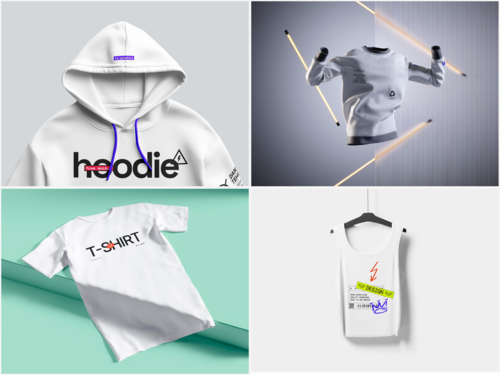
For brands serious about quality presentation, ls.graphics offers an exceptional mockup library that genuinely stands apart. Their apparel mockups feature ultra-realistic rendering with carefully organized layers, making customization straightforward even for non-designers. Scenes are available from multiple angles and in varied color styles, supporting everything from minimalist editorial looks to bold streetwear presentations. The stylish, clean compositions feel editorial rather than generic. A particularly useful Edit Online feature lets users apply designs directly in the browser — no Photoshop required. There’s also a generous selection of free scenes available to explore before committing, making it accessible for brands at every stage.
Digital Presentation as a Brand Value Statement
There’s a quieter benefit that often goes undiscussed: using digital mockups signals intentionality. Consumers and wholesale buyers increasingly scrutinize how brands operate, not just what they sell. A brand that says “we validate designs digitally before producing anything” is communicating something meaningful about its values.
Sustainability in fashion isn’t just about organic cotton or recycled polyester. It’s about building systems that produce less waste structurally. Digital-first product development is one of those systems.
Conclusion
The most honest thing sustainable fashion brands can do is close the gap between their stated values and their actual operations. Adopting digital mockup workflows does exactly that — reducing physical waste, cutting sampling costs, and enabling smarter production decisions. Tools like those available at ls.graphics make this transition practical and visually compelling, whether you’re a solo designer or a scaling sustainable label. The future of responsible fashion isn’t just in the materials. It’s in the method.